
| Area | Pros | Cons | What to Check Before Buying |
|---|---|---|---|
| Delivery | May aid dispersion. | Superiority is unproven. | Formula-specific evidence. |
| Use | Convenient capsules. | Dose may be unclear. | NMN per serving. |
| Quality | Can add formulation safeguards. | More variables require review. | Lot-specific COA and stability data. |
| Value | May suit format preferences. | Often costs more. | Cost, allergens, and storage. |
Liposomal NMN supplements use phospholipid carriers, but the format alone does not prove better absorption or health outcomes. Choose by NMN dose clarity, formula-specific evidence, finished-batch testing, and claims that match the research.

What Does Liposomal Mean in an NMN Supplement?
A liposome is a tiny sphere built from one or more phospholipid layers around a water-containing center. Depending on the formula, a liposome can hold water-soluble material in its center or associate other material with its lipid layer. Our liposomal delivery explainer covers the general technology in more detail.
The word "liposomal" does not define particle size, encapsulation efficiency, shelf stability, or the percentage of NMN actually carried in intact vesicles. An oral liposome must also face stomach acid, digestive enzymes, bile, and storage conditions. A peer-reviewed review of oral liposome delivery identifies gastrointestinal stability as a central formulation challenge.
Liposomal delivery is also different from sublingual use. A liposomal capsule is swallowed and enters the digestive tract unless its directions specify otherwise. Sublingual products are designed to remain under the tongue, so the terms should not be treated as interchangeable.
What Does the Evidence Actually Show?
The evidence supports liposomes as a delivery platform, but it does not support a blanket conclusion that every liposomal NMN product outperforms every standard capsule. Formula composition, particle characteristics, dose, storage, and the measured outcome all affect the answer.
What Liposome Technology Can Plausibly Do
Phospholipid vesicles can help disperse compounds and may protect some ingredients during digestion. They can also be engineered for different release and absorption goals. A recent review of liposomes in human nutrition concludes that stability, bioavailability, and safety still need formula-specific analysis.
That distinction matters because evidence for a liposomal vitamin, medication, or laboratory model cannot prove the performance of liposomal NMN. The finished NMN formula needs its own characterization and, ideally, a matched human comparison.
What Human NMN Research Has and Has Not Tested
Human trials show that swallowed NMN can affect NAD-related measures, but those findings do not establish a liposomal advantage. One randomized trial gave 30 healthy adults 250 mg daily for 12 weeks and found higher whole-blood NAD+ without obvious adverse effects during the study. The small sample and short duration limit broader conclusions. See the 250 mg NMN trial.
Another randomized trial assigned 80 healthy middle-aged adults to placebo or 300, 600, or 900 mg of oral NMN for 60 days. It measured NAD concentration, safety, physical performance, and other outcomes, but it was not a matched liposomal comparison. The dose-dependent NMN trial therefore cannot tell you that a lower liposomal dose equals a higher standard dose.
A separate 10-week trial involved postmenopausal women with prediabetes who were overweight or obese. Its metabolic findings apply to that population and oral material, not to all adults or every delivery system. The prediabetes NMN trial is useful human evidence, but it does not establish superiority for a marketed liposomal formula.
What Are the Possible Advantages and Tradeoffs?
The best way to compare the format is to separate a reasonable formulation goal from a proven clinical result. A delivery feature can be promising even when direct comparative evidence is still limited.
| Factor | Practical Interpretation |
|---|---|
| Phospholipid carrier | It may support dispersion or protection, but performance depends on the finished formulation. |
| Capsule convenience | A premeasured capsule can be easy to use consistently. Serving size still matters. |
| Formula complexity | Phospholipid source, added ingredients, and storage needs create more variables to check. |
| Comparative evidence | Human oral NMN research does not yet show that liposomal delivery reliably beats a matched standard formula. |
| Price | A premium is easier to justify when product-specific characterization and testing are available. |
Do not assume that "more absorbed" automatically means "better" or that it allows you to reduce the dose by a fixed percentage. Without a direct pharmacokinetic comparison, milligram-for-milligram conversion between formats is guesswork.
What Should You Check Before Buying?
Use a product-level review, not a format-level promise. These checks reveal whether the label, evidence, and quality documentation answer the questions created by a liposomal claim.
Dose and Blend Transparency
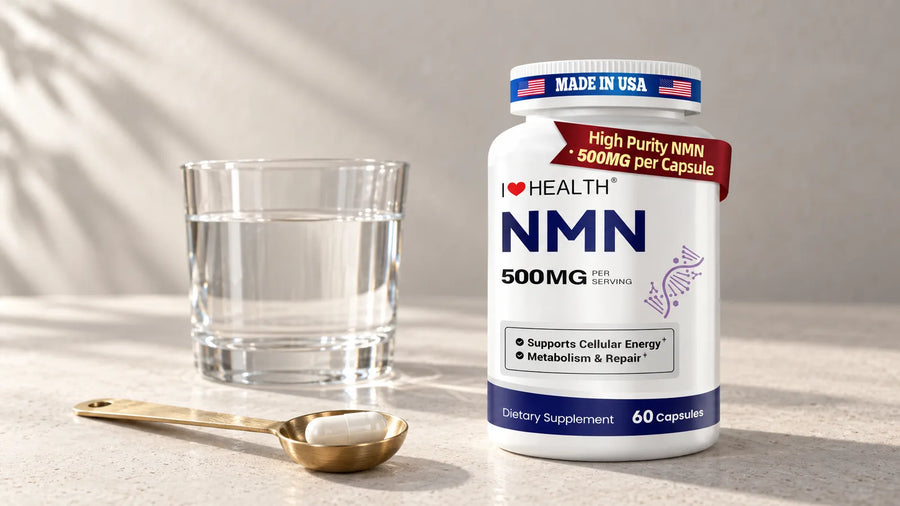
Confirm whether the stated milligrams refer to NMN alone or to a blend. Our Liposomal NMN 500 mg formula lists 500 mg of ILH NMN Blend per capsule and identifies liposomal NMN plus beta-NMN. The public listing does not assign a separate milligram amount to each component, so the correct interpretation is 500 mg for the combined blend.
If you want one clearly stated beta-NMN amount instead of a blended delivery format, compare the label with our standard NMN 500 mg capsules. Our broader NMN supplement collection lets you compare serving size and format before deciding.

Liposome Characterization and Formula Evidence
Look for the phospholipid source, relevant allergens, storage directions, and evidence that the product contains a characterized delivery system. Useful technical data may include particle-size distribution, encapsulation efficiency, and stability through the stated shelf life. A phospholipid on an ingredient list does not, by itself, answer those questions.
Treat numerical absorption claims as formula-specific. Ask what was compared, whether the full commercial product was tested, the number of participants, and whether the result was peer reviewed. Evidence from a different ingredient or a laboratory model cannot establish the same percentage for NMN.
Finished-Batch Quality and Claims
Check identity, potency, contaminants, lot number, and whether the certificate of analysis (COA) matches the bottle. In a 2024 analysis of 18 NMN products, measured content ranged from nondetectable to near the stated amount, although the method was not validated specifically for the liposomal products. That limitation is important, but the NMN product-content analysis still shows why transparent batch records matter.
Our quality and transparency commitments explain how we make available product and testing information easier to locate. A COA should still be read by scope: potency does not prove absorption, and a contaminant panel does not prove a health outcome. FDA dietary supplement rules require controls for identity, purity, strength, composition, and relevant contamination, as outlined in the dietary supplement CGMP framework.
How Should Safety and Use Fit the Decision?
Follow the selected product's serving directions and do not raise or combine doses simply because the delivery format sounds efficient. Human NMN trials have generally been short, used specific populations, and cannot establish long-term safety for every adult or every formula. Our complete NMN guide provides broader context on NMN, NAD+, dose, and current evidence.
Ask a qualified healthcare professional before use if you are pregnant, breastfeeding, managing a medical condition, preparing for surgery, or taking medication. Stop use and seek guidance if you develop an adverse reaction. A delivery system should never be used to bypass individual safety review.
Choose Evidence Over the Delivery Buzzword
Liposomal NMN supplements may offer a thoughtful delivery design, but the word "liposomal" is not proof of superior absorption or results. Choose by dose clarity, formula-specific evidence, finished-batch testing, realistic claims, and a format you can use consistently. Treat any price premium as payment for documented quality, not for the delivery term alone.
Frequently Asked Questions
Q1. How Do You Compare Cost per NMN Serving?
Divide the current bottle price by the number of labeled servings, then compare the disclosed NMN amount in each serving. A blend deserves an extra check because its total weight may not reveal each component. Include subscription conditions and shipping only when they apply to your actual order.
Q2. Do Liposomal NMN Capsules Need Refrigeration?
Not always. Storage depends on the lipids, manufacturing process, packaging, and stability data for the finished formula. Use the temperature and moisture directions on the bottle. Do not refrigerate automatically because condensation or repeated temperature changes may be unsuitable for some capsules.
Q3. What Does Encapsulation Efficiency Mean?
Encapsulation efficiency is the percentage of the measured ingredient associated with or enclosed by the intended carrier under a stated test method. It is not the same as absorption in people. Ask whether the value applies to the finished product, how it was measured, and whether it remains stable through shelf life.
Q4. Can Liposomal NMN Contain Soy or Sunflower Phospholipids?
Yes. Liposomes commonly use phospholipids derived from sources such as soy or sunflower, but the source varies. Read the ingredient and allergen statements on the exact bottle. If the source is not clear and you have an allergy or avoidance preference, contact the manufacturer before use.
Q5. Can Powder Appearance Prove That NMN Is Liposomal?
No. Color, texture, taste, or behavior in water cannot verify intact liposomes or a specific encapsulation percentage. Those observations may reflect several ingredients or manufacturing choices. Reliable verification requires an appropriate analytical method, a defined sample, and results tied to the finished formula rather than a visual test at home.
Disclaimer
This content is for general educational purposes and is not medical advice. Dietary supplements are not intended to diagnose, treat, cure, or prevent disease. Ask a qualified healthcare professional before use when health conditions, pregnancy, medication, or dose concerns apply.