
No universal research-backed starting dose exists for NMN 500mg. It can be a convenient one-capsule amount for some products, but human trials have tested doses both below and above 500 mg, usually for only a few weeks. Your decision should start with the label, the evidence, and your health history.
What Does 500 mg Mean on the Label?
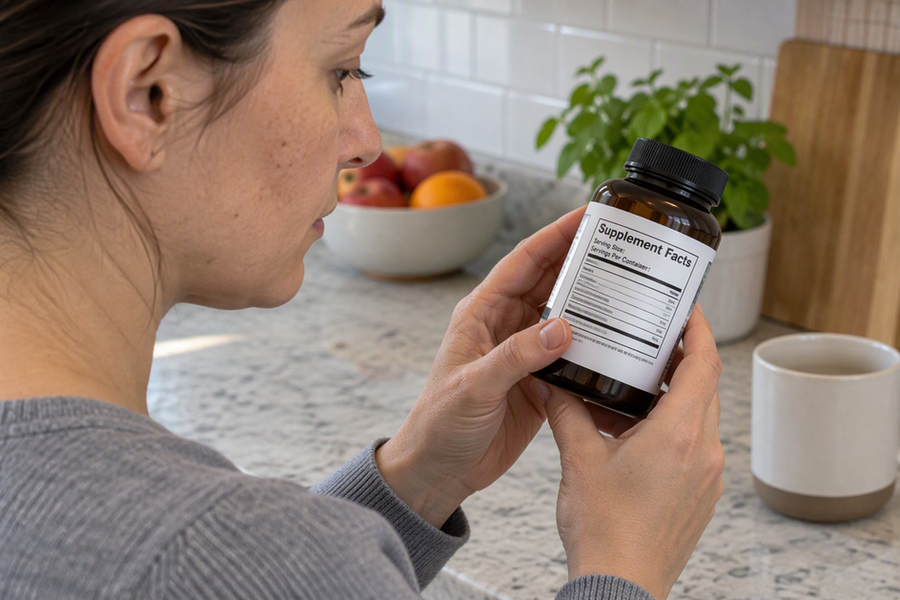
The 500 mg figure should identify an amount per capsule or per serving, but those are not always the same. FDA requires the Supplement Facts panel to show serving size, servings per container, and the quantitative amount of each dietary ingredient unless it is part of a proprietary blend. The FDA label requirements make the back panel more useful than a large number on the front.
Our standard NMN 500 mg product lists 500 mg in one capsule and 60 servings per bottle. Our 1,000 mg product provides that serving in two capsules. Reading both the amount and serving size prevents an unintended twofold difference.
Available lot information can be checked through our batch Transparency Program.
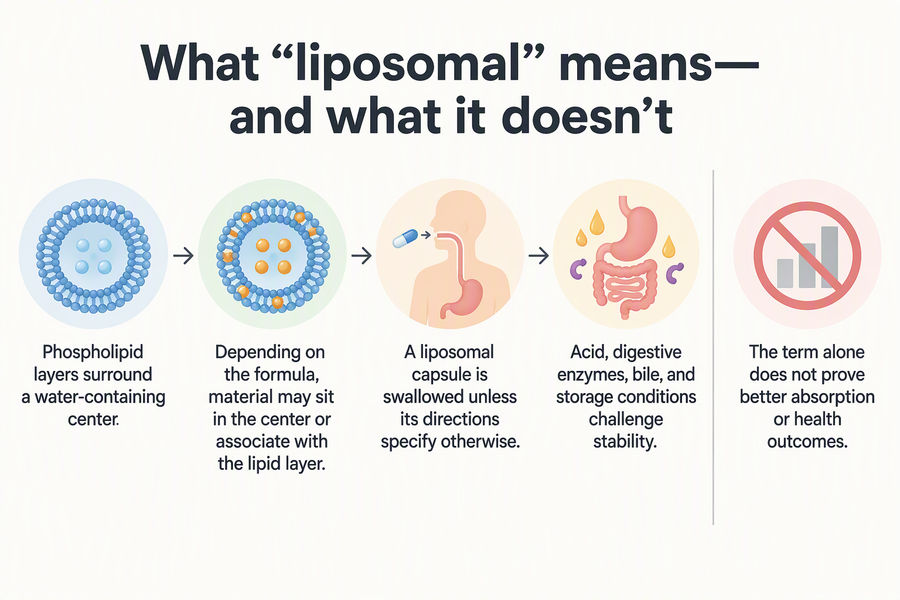
A blend requires another distinction. Our liposomal NMN product lists 500 mg of an ILH NMN blend containing liposomal and standard beta-NMN. It does not mean 500 mg of each component.
Compare the stated ingredient amount, formula type, capsule count, and directions before comparing price or convenience across the NMN and NAD+ collection.
Our guide to liposomal delivery explains that format without treating it as proof of better results.

How Does 500 mg Compare With Human Trials?
Five hundred milligrams sits inside the broad range tested in adults, but direct evidence at exactly 500 mg is limited. The most relevant study at that amount used a single dose, not daily use over months.
The Direct 500 mg Evidence Is a Single-Dose Study
A 2020 trial gave 100, 250, and 500 mg on separate occasions to 10 healthy men aged 40 to 60. The study monitored them for five hours after each dose and found no significant clinical symptoms or harmful changes. The single-dose NMN study supports short-term tolerability in that narrow group. It does not establish that 500 mg is optimal or safe for years.
Repeated-Dose Trials Used Several Different Amounts
A randomized trial assigned 30 healthy adults to 250 mg daily or placebo for 12 weeks. The active group had higher whole-blood NAD+ and no obvious treatment-related adverse effects. This 250 mg daily trial shows that biochemical activity does not require a 500 mg dose.
Another 60-day trial assigned 80 healthy middle-aged adults to placebo or 300, 600, or 900 mg daily. Blood NAD increased in all active groups, with the highest levels at 600 and 900 mg. Because the trial did not include 500 mg and had a short duration, the 300 to 900 mg dose-response trial cannot identify 500 mg as a best starting dose.
| Study Pattern | What It Supports | What It Does Not Prove |
|---|---|---|
| 500 mg once in 10 healthy men | Short observation after one dose | Daily or long-term safety. |
| 250 mg daily for 12 weeks | NAD+ biomarker response in a small adult sample | An ideal dose for every adult. |
| 300, 600, or 900 mg daily for 60 days | A short dose-response comparison | Lifespan extension or a universal threshold. |
| 1,250 mg daily for four weeks | Short-term tolerability in 31 healthy adults | A safe upper limit or reason to use more. |
The last row comes from a randomized study of 31 adults aged 20 to 65. No severe treatment-related event appeared during four weeks, but the authors called for larger and longer research. The 1,250 mg safety trial should not be read as a dosing recommendation.
Is 500 mg an Evidence-Based Starting Dose?
No universal evidence-based starting dose has been established. Five hundred milligrams is a studied and commercially convenient amount. However, neither FDA nor another authoritative US body has set a recommended daily intake, optimal dose, or tolerable upper limit for NMN.
A sensible starting decision uses the lowest amount that matches a clear purpose and a verified product, with professional input when risk factors apply. That may be less than 500 mg for some people, 500 mg for others, or no NMN at all. Age alone does not generate a validated dosing formula, and blood NAD testing has no widely accepted treatment target for routine consumer use.
Do not increase a dose simply because you do not feel a quick effect. Human trials mainly measured biomarkers, and a 2025 pooled analysis found no significant improvement in several muscle outcomes among older adults taking NMN or a related NAD precursor. The inconclusive muscle results show why subjective expectations should not drive escalation.
For NMN's broader evidence, regulatory status, and complete product-quality framework, use our general NMN supplement guide rather than turning a 500 mg dose decision into a second full category guide.
What Safety Checks Come Before 500 mg?
Short human trials suggest NMN is generally tolerated by selected healthy adults. They do not answer every interaction, disease, pregnancy, or long-term question.
Ask Before Use When Your Risk Is Higher
Ask a clinician before use during pregnancy or breastfeeding, with a cancer history, or with advanced liver disease. Get the same advice if you take prescription medicines or plan high-dose long-term use. Current clinical guidance on NAD supplements flags these groups because long-term evidence and condition-specific safety are limited.
Also review the whole formula. Added herbs or nutrients can introduce their own contraindications and interactions, so evidence from a single-ingredient NMN trial cannot establish the safety of a multi-ingredient blend.
Monitor the Person, Not Just the Dose
Start only when you can identify what changed. Keep medications, other supplements, sleep, and diet reasonably stable when practical, and record new symptoms. Stop and seek medical advice for a concerning reaction rather than lowering or raising the dose on your own.
FDA advises consumers to consult a healthcare professional because supplements can interact with medicines or other products. Supplements are not approved for safety and effectiveness before sale, and FDA does not routinely test every product before marketing.

Start With Clarity, Not a Higher Number
Five hundred milligrams is a convenient label amount with limited human study context, not a universal prescription. Confirm what the serving contains, consider whether a lower amount or no supplement better fits your situation, and use batch documentation plus professional guidance to keep the decision grounded.
NMN Supplement Frequently Asked Questions
Q1. Can You Split a 500 mg NMN Capsule?
Not reliably unless the directions specifically allow it. Opening a capsule can make the divided amounts uneven, and it may change how a specialized formulation is delivered. If you want less than 500 mg, choose a product with a lower measured serving rather than estimating half by sight.
Q2. Should You Take 500 mg of NMN With Food?
It depends on the product directions and your tolerance. Human trials have not established one universal food rule for NMN. Follow the label for the exact formula, and ask a clinician if taking it with or without food affects nausea, other symptoms, or medication timing.
Q3. Do You Need to Cycle a 500 mg NMN Dose?
No evidence-based cycling schedule has been established. Published trials usually used a defined daily dose for a limited study period rather than comparing continuous use with planned breaks. Do not invent an on-and-off schedule to compensate for missing long-term safety data. Discuss ongoing use with a clinician.
Q4. Does 500 mg of NMN Require TMG?
No clinical guideline requires trimethylglycine (TMG) with a 500 mg NMN dose. Online claims about preventing methyl depletion are not the same as evidence that every user needs another supplement. Adding TMG changes the routine and may add risks, so discuss a combination with a qualified professional.
Q5. Can Body Weight Determine a 500 mg NMN Dose?
No validated weight-based formula exists for consumer NMN use. Human trials generally assigned a fixed daily amount rather than a dose calculated in milligrams per kilogram. Body size alone therefore cannot show whether 500 mg is suitable. Health history, medicines, product directions, and professional advice remain more relevant.
Disclaimer
This content is for general educational purposes and is not medical advice. Dietary supplements are not intended to diagnose, treat, cure, or prevent disease. Ask a qualified healthcare professional before use when health conditions, pregnancy, medication, or dose concerns apply.