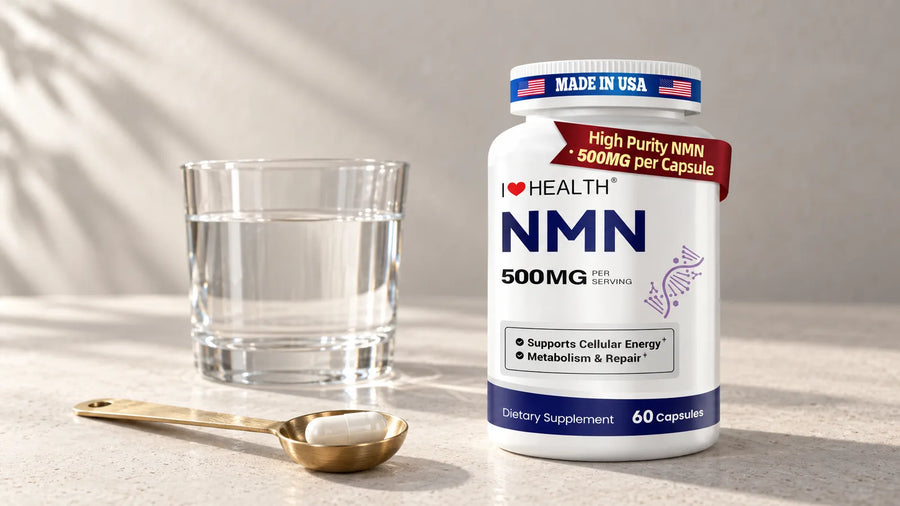

Magnesium glycinate 500mg does not always mean that a capsule contains 500 mg of elemental magnesium. In many products, 500 mg refers to the total weight of magnesium glycinate, which includes both magnesium and glycine. The amount of actual magnesium may be much lower.
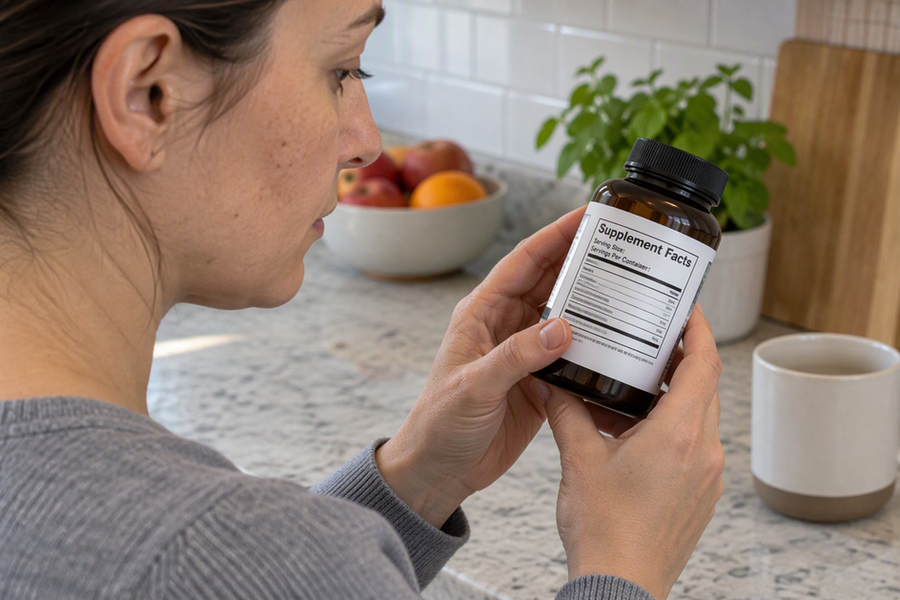
The quickest way to understand your supplement is to ignore the largest number on the front for a moment. Turn the bottle around and find the magnesium amount in the Supplement Facts panel. That is usually the number you should use when comparing products and calculating your daily intake.
What You Might Not Know
A label that says magnesium glycinate 500mg can have several meanings:
| Label wording | What it may mean |
| 500 mg magnesium glycinate | The total weight of the magnesium and glycine compound |
| 500 mg per capsule | Each capsule contains 500 mg of the compound |
| 500 mg per serving | The full serving provides 500 mg, possibly from multiple capsules |
| Magnesium 500 mg as magnesium glycinate | The serving claims to provide 500 mg of elemental magnesium |
| 500 mg magnesium blend | The amount may come from glycinate plus other magnesium forms |
These descriptions are not interchangeable. Two bottles can both display “500 mg” while providing very different amounts of elemental magnesium.
Always use the Supplement Facts panel to answer three questions:
- How large is one serving?
- How much magnesium does that serving provide?
- What form or forms supply the magnesium?
Magnesium Glycinate Is Not Pure Magnesium
Magnesium glycinate is a compound created by binding magnesium to glycine, an amino acid. It is also commonly called magnesium bisglycinate.
Because the compound contains both substances, its total weight is not the same as the weight of magnesium alone. Most of the compound consists of glycine rather than magnesium.
Pure magnesium glycinate contains approximately 14 percent elemental magnesium by weight. Using that proportion, 500 mg of the pure compound would provide roughly 70 mg of elemental magnesium.
The calculation looks like this:
500 mg magnesium glycinate × approximately 14% = about 70 mg elemental magnesium
This is a useful estimate, not a replacement for the product label. Manufacturing methods, hydration, buffering, and ingredient combinations can affect the final composition. The declared magnesium amount in the Supplement Facts panel should remain your primary reference.
How to Read the Front and Back Labels
The front label is designed to identify and present the product. The Supplement Facts panel provides the information needed to understand its nutritional content.
The Food and Drug Administration requires dietary supplement labels to identify the serving size and declare the amount of each dietary ingredient per serving. This makes the back or side panel more useful than a large front label number when you are calculating intake.
Consider this example:
Front of bottle:
Magnesium Glycinate 500 mg
Supplement Facts:
Serving size: 1 capsule
Magnesium: 70 mg
Source: Magnesium glycinate
In this example, one capsule contains 500 mg of the complete magnesium glycinate compound, but it delivers approximately 70 mg of elemental magnesium.
Now consider a different label:
Front of bottle:
Magnesium Glycinate 500 mg
Supplement Facts:
Serving size: 2 capsules
Magnesium: 100 mg
Source: Magnesium glycinate
Here, the advertised 500 mg may apply to the two capsule serving rather than each capsule. Taking one capsule would provide only half of the listed serving.
The lesson is simple: never assume that the front label amount applies to one capsule.
Compound Weight and Elemental Magnesium
Understanding two terms removes most of the confusion around magnesium glycinate 500mg.
Compound weight
Compound weight includes the magnesium and everything chemically bound to it. For magnesium glycinate, this includes glycine.
This number describes the amount of the complete ingredient. It does not tell you directly how much nutritional magnesium you are receiving.
Elemental magnesium
Elemental magnesium is the amount of magnesium itself. This is the number used when discussing recommended dietary intake, supplemental intake, and the percentage of the Daily Value.
If a product contains 500 mg of magnesium glycinate compound and supplies 70 mg of elemental magnesium, the 70 mg figure is the one that counts toward your daily magnesium intake.

Why Do Some 500 mg Products Provide More Magnesium?
Not every magnesium glycinate 500mg formula has the same composition. Some products use pure magnesium bisglycinate, while others use a buffered material or combine glycinate with another magnesium source.
A buffered magnesium glycinate may include magnesium oxide. Magnesium oxide contains a higher proportion of elemental magnesium by weight, so adding it can increase the elemental amount without requiring a much larger capsule.
This does not automatically make a buffered formula good or bad. It means you need to know what you are buying.
Pure and buffered formulas can differ in several ways:
| Feature | Pure magnesium glycinate | Buffered magnesium glycinate |
| Primary mineral form | Magnesium bound to glycine | Glycinate combined with another magnesium source |
| Elemental magnesium by weight | Usually lower | Often higher |
| Capsule size | May require more material | Can deliver more magnesium in less space |
| Digestive experience | Often selected for gentleness | Depends on the additional form and amount |
| Label reading | Usually more straightforward | Requires careful ingredient review |
If a label claims that a small capsule contains a surprisingly large amount of elemental magnesium from glycinate, review the ingredient list for magnesium oxide or another mineral source.
Clear disclosure matters more than whether a formula is buffered.
Is 500 mg Too Much?
You cannot answer this question until you know whether 500 mg refers to the compound or elemental magnesium.
If it means 500 mg of magnesium glycinate compound, the actual magnesium amount may be around 70 mg. That is very different from taking 500 mg of elemental magnesium.
If it means 500 mg of elemental magnesium, the serving exceeds the adult supplemental upper limit established by the National Academies and reported by the National Institutes of Health.
The NIH Office of Dietary Supplements lists an adult upper limit of 350 mg per day from dietary supplements and magnesium containing medications. This limit does not include magnesium naturally present in foods.
The recommended total daily intake is also different from the supplemental upper limit:
| Adult group | Recommended total daily intake |
| Men ages 19 to 30 | 400 mg |
| Men ages 31 and older | 420 mg |
| Women ages 19 to 30 | 310 mg |
| Women ages 31 and older | 320 mg |
| Pregnant adults | 350 to 360 mg |
Recommended intake includes food, beverages, and supplements. The upper limit applies only to supplements and magnesium containing medications.
A healthcare professional may recommend a different amount for a specific reason. That should be based on individual needs rather than the front label number.
How Many Capsules Should You Take?
Do not calculate your serving from the words magnesium glycinate 500mg alone. Use the elemental magnesium amount and the manufacturer’s directions.
Suppose one capsule contains 500 mg of magnesium glycinate compound and provides 70 mg of elemental magnesium:
| Capsules | Magnesium glycinate compound | Approximate elemental magnesium |
| 1 | 500 mg | 70 mg |
| 2 | 1,000 mg | 140 mg |
| 3 | 1,500 mg | 210 mg |
| 4 | 2,000 mg | 280 mg |
This example explains why several capsules may be needed to provide a moderate elemental amount. It also shows why comparing supplements by pill count can be misleading.
Before deciding how many capsules to take, account for magnesium from:
- Multivitamins
- Electrolyte powders
- Sleep support formulas
- Antacids
- Laxatives
- Other mineral supplements
Follow the serving instructions unless a doctor, pharmacist, or registered dietitian gives you different guidance.

What Does the Daily Value Percentage Tell You?
The percentage of the Daily Value gives useful context.
The FDA Daily Value for magnesium for adults and children aged four and older is 420 mg. If a Supplement Facts panel lists 84 mg of magnesium, it may also show 20% Daily Value.
This does not mean you must obtain the remaining 80 percent from additional capsules. Your meals may already provide a meaningful amount.
Magnesium is naturally found in foods such as:
- Pumpkin seeds
- Chia seeds
- Almonds
- Spinach
- Beans
- Whole grains
- Fortified cereals
A supplement should fill a nutritional gap rather than automatically supply your entire daily requirement.
Ingredient Identity Matters as Much as the Number
Once you understand the elemental amount, check who produced the magnesium ingredient and how clearly the mineral form is identified.
Albion® Minerals has specialized in amino acid chelate technology since 1956. Its TRAACS® designation means The Real Amino Acid Chelate System. According to Albion® Minerals, the designation confirms that an ingredient is fully reacted and meets its standards for verified chelation.
This type of ingredient identification gives shoppers more information than a generic “magnesium complex” description. It helps connect the product label to a defined raw material and established chelation process.
For shoppers who value recognizable ingredient sourcing, I Love Health Magnesium Glycinate with Albion® TRAACS® provides a convenient option made with Albion® chelated magnesium. Check its Supplement Facts panel and serving instructions to determine the precise elemental amount that fits your routine.
You can also explore the broader I Love Health magnesium collection when comparing glycinate with other formulas.
A Five Step Label Check
Use this process whenever you compare magnesium glycinate 500mg products.
Step 1: Find the serving size
Confirm whether one serving is one capsule, two capsules, or more.
Step 2: Locate “Magnesium” in Supplement Facts
Record the milligrams listed on that line. This is normally the elemental amount per serving.
Step 3: Check the source in parentheses
Look for wording such as “as magnesium glycinate,” “as magnesium bisglycinate chelate,” or a list of multiple magnesium forms.
Step 4: Read the other ingredients
Look for additional mineral sources, capsule materials, allergens, sweeteners, colors, and fillers.
Step 5: Calculate the daily total
Add the elemental magnesium from every supplement and magnesium containing medication you use.
This process allows you to compare products accurately, even when their front labels use different wording.

Common Label Mistakes to Avoid
- The first mistake is assuming that 500 mg always means elemental magnesium. It often refers to the compound.
- The second mistake is overlooking the serving size. A number that appears to describe one capsule may apply to two or three capsules.
- The third mistake is comparing prices by bottle size alone. A larger bottle is not necessarily a better value if each serving provides little elemental magnesium or requires several capsules.
- The fourth mistake is assuming that a larger amount is automatically better. A suitable dose that you tolerate and actually need is more useful than the highest number available.
- The fifth mistake is ignoring other sources. Taking magnesium from several supplements can raise your total without you realizing it.
Safety Comes Before the Front Label
High supplemental magnesium intake can cause diarrhea, nausea, and abdominal cramping. Extremely high intake may lead to more serious effects.
Speak with a healthcare professional before using magnesium supplements if you have kidney disease, are pregnant or breastfeeding, take prescription medications, or use magnesium containing antacids or laxatives.
Magnesium can reduce the absorption of certain antibiotics and medicines used for osteoporosis. Some medications can also affect the body’s magnesium levels. A pharmacist can help you determine whether products should be taken several hours apart.
How to Make Sense of the Label
Magnesium glycinate 500mg usually describes the weight of a magnesium and glycine compound, not necessarily 500 mg of elemental magnesium. A pure 500 mg magnesium glycinate ingredient may provide approximately 70 mg of actual magnesium, although the final number depends on the product formulation.
Do not choose a supplement by the front label alone. Check the serving size, elemental magnesium, mineral source, additional ingredients, and suggested use.
Once you know which number represents actual magnesium, the label becomes much easier to understand. You can then compare products fairly, calculate your total intake, and choose a formula based on clear information rather than the largest number on the bottle.