
Pure, anhydrous magnesium glycinate contains about 14.1 percent elemental magnesium by weight. This means 1,000 mg of the complete magnesium glycinate compound theoretically provides about 141 mg of actual magnesium.
However, do not assume every commercial product contains exactly 14.1 percent. Hydration, buffering, added magnesium oxide, blended mineral forms, and serving size can all change the final amount. The most reliable number is the magnesium amount listed in the Supplement Facts panel.
Here is the quick calculation:
Magnesium glycinate compound weight × 0.141 = estimated elemental magnesium
For example:
1,000 mg × 0.141 = approximately 141 mg elemental magnesium
This formula is useful for understanding the chemistry. For choosing a dose, always use the elemental amount declared on the product label.
What Is Elemental Magnesium?
Elemental magnesium means the amount of magnesium itself, without the weight of the substance attached to it.
Magnesium does not normally appear alone in oral supplements. It is combined with another substance to create a magnesium salt or chelate. Common examples include:
- Magnesium glycinate
- Magnesium citrate
- Magnesium oxide
- Magnesium malate
- Magnesium chloride
- Magnesium L threonate
In magnesium glycinate, magnesium is bound to glycine. Glycine adds weight to the compound, but that additional weight does not count as elemental magnesium.
A simple comparison is a useful way to understand this:
- Compound weight includes magnesium plus glycine.
- Elemental magnesium includes only the magnesium portion.
Health recommendations, Daily Values, and supplemental safety limits are based on elemental magnesium. They are not based on the total weight of magnesium glycinate.
The NIH Office of Dietary Supplements clearly states that the Supplement Facts panel declares elemental magnesium rather than the weight of the complete magnesium containing compound.

Why Pure Magnesium Glycinate Is About 14.1 Percent Magnesium
The theoretical percentage comes from the molecular structure of magnesium glycinate, which is also called magnesium bisglycinate or magnesium diglycinate.
According to the National Library of Medicine PubChem database, magnesium glycinate has a molecular weight of approximately 172.42 grams per mole. Magnesium itself has an atomic weight of approximately 24.305 grams per mole.
The calculation is:
24.305 ÷ 172.42 × 100 = approximately 14.1 percent
The rest of the compound consists mainly of the two glycinate components attached to the magnesium.
This percentage represents the theoretical value for pure, anhydrous magnesium bisglycinate. Real supplement ingredients may not always match this value exactly. For example, water associated with the compound can add weight and reduce the percentage of magnesium. Some commercial materials may therefore provide closer to 10 to 14 percent elemental magnesium.
The label remains more important than the theoretical formula.
A Calculation Table You Can Copy
The following table uses the theoretical 14.1 percent value for pure, anhydrous magnesium glycinate.
| Magnesium glycinate compound | Calculation | Estimated elemental magnesium |
| 100 mg | 100 × 0.141 | 14 mg |
| 200 mg | 200 × 0.141 | 28 mg |
| 400 mg | 400 × 0.141 | 56 mg |
| 500 mg | 500 × 0.141 | 71 mg |
| 750 mg | 750 × 0.141 | 106 mg |
| 1,000 mg | 1,000 × 0.141 | 141 mg |
| 1,500 mg | 1,500 × 0.141 | 212 mg |
| 2,000 mg | 2,000 × 0.141 | 282 mg |
| 2,500 mg | 2,500 × 0.141 | 353 mg |
Values are rounded to the nearest milligram.
You can calculate any amount using this formula:
Compound weight × 0.141 = estimated elemental amount
To work backward, use:
Desired elemental amount ÷ 0.141 = estimated compound weight required
For example, suppose you want to understand how much pure magnesium glycinate would theoretically be needed to provide 200 mg of magnesium:
200 ÷ 0.141 = approximately 1,418 mg magnesium glycinate
Again, these are theoretical calculations. Do not use them to override the Supplement Facts panel or determine a personal dose.
How to Read a Magnesium Glycinate Label
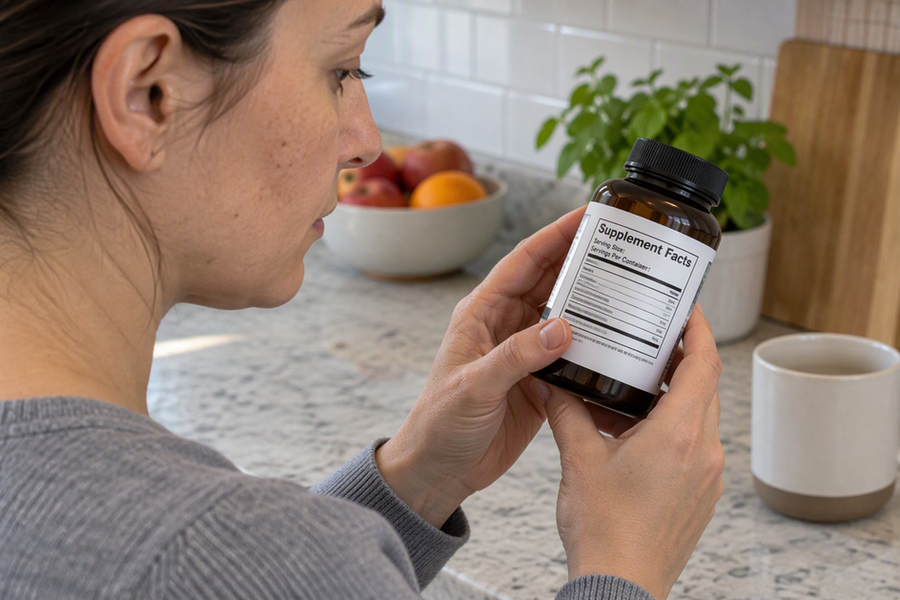
Start with the Supplement Facts panel, not the large number on the front of the bottle.
Read the label in this order:
1. Find the serving size
Check whether one serving is one capsule, two capsules, three capsules, or a measured scoop of powder.
A label may provide 200 mg of magnesium per serving, but the serving could require several capsules.
2. Find the line that says “Magnesium”
In the United States, the milligram amount on this line normally represents elemental magnesium.
For example:
Magnesium 200 mg, as magnesium glycinate
This means the full serving provides 200 mg of actual magnesium. It does not mean the serving contains only 200 mg of total magnesium glycinate compound.
The amount of compound required to provide that elemental dose would be much larger.
3. Check the percentage of Daily Value
The current FDA Daily Value for magnesium is 420 mg for adults and children aged four and older.
The FDA Daily Value guide explains that the percentage shows how much one serving contributes to the Daily Value.
Examples include:
| Elemental magnesium per serving | Approximate Daily Value |
| 42 mg | 10% |
| 84 mg | 20% |
| 105 mg | 25% |
| 210 mg | 50% |
| 420 mg | 100% |
If the percentage and milligram amount do not appear consistent, verify the serving size and contact the manufacturer.
4. Identify the source
Look for wording such as:
- As magnesium glycinate
- From magnesium bisglycinate chelate
- From magnesium glycinate and magnesium oxide
- From a magnesium complex
The source tells you which compound supplies the elemental magnesium.
5. Read the other ingredients
Check for additional mineral sources, capsule materials, fillers, sweeteners, flavors, colors, and allergens.
A product marketed primarily as glycinate may still contain another magnesium form. That does not automatically make the product unsuitable, but the label should make the composition clear.

Why Similar Labels Can Provide Different Amounts
Two products may display the same compound weight while supplying different amounts of elemental magnesium.
There are several reasons.
One product may list compound weight
A front label may say “Magnesium Glycinate 500 mg.” If that refers to pure compound weight, the product may provide approximately 71 mg of magnesium.
Another product may list elemental magnesium
A Supplement Facts panel may say “Magnesium 500 mg, as magnesium glycinate.” This indicates 500 mg of elemental magnesium per serving.
These products are not equivalent. The second serving would require much more magnesium containing material or a combination of mineral sources.
The serving sizes may differ
One bottle may list the amount per capsule. Another may list the amount per three capsule serving.
Always convert both products to elemental magnesium per capsule before comparing them.
One formula may be buffered
Buffered magnesium glycinate commonly contains another magnesium source, often magnesium oxide. Magnesium oxide contains a much higher percentage of elemental magnesium by weight.
Adding oxide can raise the elemental amount without requiring as much total material. This is why a small capsule may appear to provide more magnesium than the theoretical glycinate calculation allows.
One formula may contain bound water
Some magnesium glycinate ingredients contain water as part of their physical structure. This additional weight reduces the percentage of elemental magnesium in the raw material.
The theoretical 14.1 percent calculation may therefore overestimate the magnesium in a hydrated ingredient.
The products may use different specifications
Ingredient purity, manufacturing processes, assay ranges, and formulation targets can produce small differences between finished products. This is another reason to use the declared elemental amount rather than expecting every product to match one universal percentage.
Pure Glycinate Versus Buffered Glycinate
Pure and buffered formulas should not be judged by the elemental number alone.
Pure magnesium glycinate usually provides a lower percentage of magnesium by weight because much of the compound is glycine. It may require more capsules or a larger powder serving to provide a substantial elemental amount.
Buffered glycinate combines the chelated material with another magnesium source. It can provide more elemental magnesium in fewer capsules, but the entire amount may not come from glycinate.
Use these questions when comparing the two:
- Does the label identify every magnesium source?
- How much elemental magnesium is provided per serving?
- How many capsules are required?
- Does the manufacturer state whether the formula is buffered?
- Are quality records or product testing details available?
I Love Health offers several strengths in its magnesium glycinate range. Review the selected variant’s Supplement Facts panel because compound weight, elemental content, and serving size may differ by strength.
You can also compare options in the Magnesium and Sleep Support collection.

How to Compare Cost Accurately
Do not compare magnesium supplements by bottle price, capsule count, or front label milligrams alone.
Calculate the cost per 100 mg of elemental magnesium:
Product price ÷ total elemental magnesium in the bottle × 100
Suppose a bottle costs $20 and contains 120 servings with 100 mg of magnesium per serving:
120 × 100 mg = 12,000 mg elemental magnesium per bottle
$20 ÷ 12,000 × 100 = about $0.17 per 100 mg
This method gives you a fair comparison even when products use different serving sizes or compound weights.
Price is not the only consideration. Ingredient disclosure, testing, tolerability, capsule count, and convenience also matter. Available quality documentation can be reviewed through the I Love Health Transparency Program.
How Much Elemental Magnesium Do Adults Need?
Most adults need 310 to 420 mg of magnesium per day in total, depending on age and sex.
According to the NIH:
| Adult group | Recommended total daily intake |
| Men ages 19 to 30 | 400 mg |
| Men ages 31 and older | 420 mg |
| Women ages 19 to 30 | 310 mg |
| Women ages 31 and older | 320 mg |
| Pregnant adults | 350 to 360 mg |
These amounts include magnesium from food, drinks, supplements, and medications.
They should not be treated as automatic supplement doses. Foods such as pumpkin seeds, almonds, spinach, beans, and whole grains can provide a meaningful portion of daily magnesium needs.
The adult upper limit for magnesium from supplements and magnesium containing medications is 350 mg per day, unless a healthcare professional recommends otherwise. Magnesium naturally present in food does not count toward this supplemental limit.
A Final Label Checklist
Before buying or using a magnesium glycinate product, confirm the following:
- Elemental magnesium per serving
- Capsules or scoops per serving
- Magnesium source or sources
- Compound weight, if provided
- Percentage of Daily Value
- Whether the formula is pure, buffered, or blended
- Magnesium from your other supplements and medications
If these details are unclear, contact the manufacturer before calculating your intake.
Check Elemental Magnesium Before Trusting Front Labels
Pure, anhydrous magnesium glycinate theoretically contains about 14.1 percent elemental magnesium. This means 500 mg of compound provides approximately 71 mg of magnesium, while 1,000 mg provides approximately 141 mg.
Commercial products may provide different percentages because of hydration, buffering, additional magnesium forms, and formulation choices. For that reason, the theoretical calculation should be used only as a reference.
The number that matters for daily intake is the elemental magnesium listed in the Supplement Facts panel. Check that amount, confirm the serving size, identify all magnesium sources, and compare products using elemental magnesium per serving rather than the largest number on the front label.