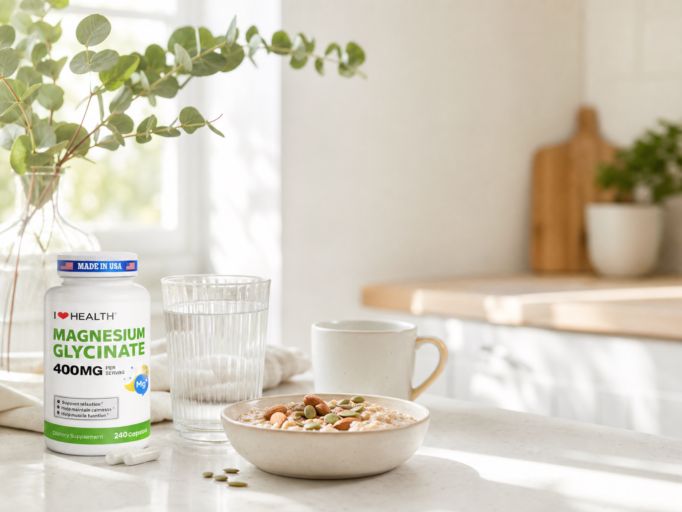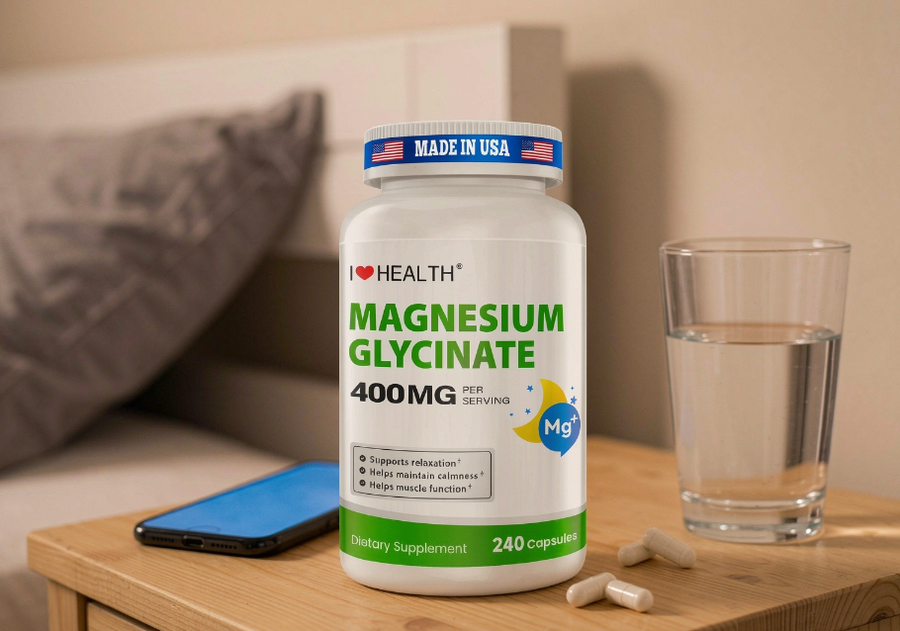

The best magnesium glycinate for sleep is not automatically the bottle with the largest number. Choose a product that states elemental magnesium clearly, discloses every magnesium source, fits your routine, provides lot-specific quality evidence, and makes modest claims that match the limited sleep research.
What Makes a Magnesium Glycinate Product Better for Sleep?
A better option makes both the formula and its limits easy to understand. It should help you answer six questions before you buy:
- Does the Supplement Facts panel state elemental magnesium per serving?
- Does the label identify glycinate or bisglycinate as the magnesium source?
- Does the ingredient list disclose any added magnesium forms?
- Can you take the full serving consistently without an impractical capsule count?
- Can you match testing documents to the finished product or lot?
- Are the sleep claims realistic rather than guaranteed?
The first three are label checks, not reasons to assume a sleep benefit. Our detailed guide to elemental magnesium on glycinate labels explains how to separate the mineral amount from compound weight. If more than one magnesium form appears, our buffered and non-buffered comparison explains what that changes.

Match the Product to Your Actual Sleep Need
The right choice depends on what you need the product to do well. Use your main constraint to set the priority, then treat any sleep effect as something to assess rather than a promised outcome.
|
Your Main Constraint |
What to Prioritize |
What Not to Assume |
|
You want a simple evening routine |
A single clearly identified magnesium source and a manageable serving |
More capsules or a larger front number will work better |
|
You are sensitive to supplements |
A fully disclosed formula and an amount you can review with a clinician |
The word glycinate guarantees zero digestive effects |
|
You value ingredient traceability |
A named raw material, complete label, and finished-lot documents |
A trademark proves the finished product improves sleep |
|
You take other supplements |
The total elemental magnesium from every product and medication |
Each label can be judged in isolation |
|
You have persistent insomnia symptoms |
Medical evaluation and evidence-based sleep care |
A supplement can identify or fix the cause |
This approach keeps the purchase decision centered on fit. Magnesium glycinate and magnesium bisglycinate usually refer to the same basic compound, so the shorter name is not a performance grade. Our glycinate and bisglycinate guide covers that naming question without turning it into a quality claim.
How Strong Is the Sleep Evidence?
The evidence is promising but modest. A 2025 randomized, double-blind trial assigned 155 adults with self-reported poor sleep to placebo or 250 mg of elemental magnesium as bisglycinate daily for four weeks. Insomnia Severity Index scores improved slightly more with magnesium, but the effect was small, other psychological outcomes did not differ, and the study relied on self-reported sleep rather than objective sleep measurements. The mean score also remained in the subthreshold insomnia range after treatment. These limits are detailed in the magnesium bisglycinate sleep trial.
Broader research remains mixed. A systematic review covering 7,582 adults found that observational studies linked magnesium status with sleep measures, while randomized trials produced contradictory results. The authors called for larger and longer trials, as summarized in the systematic review of magnesium and sleep. A separate review of three trials in 151 older adults found low to very low certainty evidence and a moderate to high risk of bias, even though pooled sleep-onset results favored magnesium. See the older-adult insomnia review for those limitations.
For shoppers, the conclusion is practical: no label feature can guarantee sleep improvement. Product quality can increase confidence in identity, dose, and contaminants. It cannot turn limited clinical evidence into certainty.
Which Sleep Claims Deserve More Weight?
Evidence deserves more weight when it matches the exact question you are asking. A result from the finished product is more directly relevant than a study of another form, dose, or population. Use this order when a bottle presents an evidence-based sleep claim:
|
Evidence Presented |
What It Can Support |
What It Cannot Prove |
|
A trial of the finished product |
The measured result for that formula, dose, population, and study period |
The same result for everyone or indefinite long-term use |
|
A trial of magnesium bisglycinate |
A cautious expectation for the studied ingredient form |
That every glycinate bottle matches the study formula |
|
Research on magnesium generally |
Biological plausibility or a broad magnesium finding |
A glycinate-specific or product-specific outcome |
|
A certificate of analysis |
The reported lot tests, such as identity, potency, or contaminants |
A sleep benefit |
|
Reviews or personal stories |
What one customer experienced |
Cause, typical results, or clinical effectiveness |
Regulatory and quality evidence answer different questions. The US Food and Drug Administration does not approve dietary supplements for safety and effectiveness before sale, as explained in FDA dietary supplement guidance. Independent programs can add label-claim and contaminant review, including the NSF supplement certification program, but certification still does not establish a sleep outcome.
Our Transparency Program lets you use the UPC on a bottle to look for available product documents. For the separate task of checking labels, source identity, and batch records, use our TRAACS shopper guide instead of treating those quality signals as sleep evidence.
How Our Magnesium Glycinate Options Differ
We offer two practical starting points, and neither should be chosen from the front number alone. Our 240-capsule magnesium glycinate line provides several labeled strength choices in a capsule format. Our Albion TRAACS magnesium glycinate is the more relevant option when a named ingredient source and traceability are priorities.
Compare the current formats in our magnesium and sleep support collection. Then read the selected product's Supplement Facts, directions, warnings, and supporting documents. Product fit depends on the complete label and your total intake, not on a single front-panel phrase.

Use Magnesium With Realistic Safety Boundaries
The amount that matters is total supplemental elemental magnesium, not the compound weight printed on the front. The NIH magnesium fact sheet sets the adult upper limit at 350 mg per day from supplements and magnesium-containing medications. This limit does not include magnesium naturally present in food. High supplemental amounts can cause diarrhea, nausea, and abdominal cramping.
Kidney function and medications can change the risk. Impaired kidney function reduces the body's ability to remove excess magnesium. Magnesium can also interfere with oral bisphosphonates and certain antibiotics, while diuretics and proton pump inhibitors can affect magnesium status. People with kidney disease, pregnancy, medication use, or persistent sleep problems should ask a qualified professional before starting or changing a supplement. MedlinePlus magnesium safety information also notes the greater risk of excess when kidney function is significantly reduced.
FAQs
Q1: Does Magnesium Glycinate Make Everyone Feel Sleepy?
No. Magnesium glycinate is not a sedative, and responses differ. A person may notice no immediate sensation even if the supplement fits their nutritional needs. Feeling sleepy is not a quality test, and the absence of drowsiness does not prove that the product failed.
Q2: How Long Should You Assess a Magnesium Glycinate Routine?
There is no universal assessment period. The 2025 sleep trial lasted four weeks and found a small average effect, not a guaranteed personal timeline. Follow the product directions and professional advice, and seek care when sleep problems persist, worsen, or affect daytime safety.
Q3: Can a Certificate of Analysis Prove Better Sleep Results?
No. A certificate of analysis can report tests for a specific product or lot, such as identity, potency, or contaminants. It does not measure your sleep and cannot establish clinical effectiveness unless the finished product itself was studied in an appropriate human trial.
Q4: Are Powders Better Than Capsules for Sleep?
Not automatically. Powders may allow flexible measurement, while capsules provide a fixed amount and simpler portability. The better format is the one that provides a clear elemental dose, accurate measuring instructions, suitable ingredients, and a serving you can use consistently.
Q5: Should You Combine Magnesium Glycinate With Melatonin?
It depends on your health, medicines, total supplement plan, and reason for poor sleep. A combination label should disclose each active amount rather than hiding them in a blend. Ask a clinician or pharmacist before combining sleep products, especially during pregnancy or when you take medication.
Choose Clarity Over a Bigger Number
The best magnesium glycinate for sleep gives you a clear elemental amount, fully disclosed sources, a practical serving, lot-relevant quality evidence, and claims that respect the modest research. Choose for fit and transparency, not for a guaranteed sleep result or the largest number on the bottle.
Disclaimer
This content is for general educational purposes and is not medical advice. Dietary supplements are not intended to diagnose, treat, cure, or prevent disease. Ask a qualified healthcare professional before use when health conditions, pregnancy, medication, or dose concerns apply.