
Neither powder nor capsules are proven to improve sleep more at a matched elemental magnesium amount. Magnesium glycinate powder for sleep is easier to adjust and swallow, while capsules provide a fixed amount without measuring or tasting the ingredient. The better format is the one whose label is clear and whose full serving you can take consistently.
Powder or Capsules: Which Is Better?
Capsules are the better default for convenience, portability, and repeatable servings.
Powder is better when you dislike swallowing pills, want to mix magnesium into a drink, or need a serving structure that the label allows you to adjust.
The delivery format does not settle whether magnesium will help your sleep. The National Center for Complementary and Integrative Health says there is still too little rigorous evidence to determine whether magnesium supplements are effective for insomnia or other sleep disorders. Its magnesium sleep evidence review found that earlier studies were often small, low quality, or conflicting.
Compare the Two Formats
Use the same fields for both products. A scoop and a capsule are not comparable until you confirm the magnesium form, elemental amount, full serving, and other ingredients.
|
Decision Point |
Powder |
Capsules |
Better Fit |
|
Serving consistency |
Requires accurate measuring. |
Provides a fixed unit. |
Capsules. |
|
Dose flexibility |
May allow partial servings when the label permits. |
Changes in whole-capsule steps. |
Powder. |
|
Ease of swallowing |
No pill to swallow. |
May require several capsules. |
Powder. |
|
Taste |
Flavor is noticeable unless masked. |
Ingredient taste is contained. |
Capsules. |
|
Portability |
Needs a container, scoop, and drink. |
Easy to carry. |
Capsules. |
|
Added ingredients |
May include flavors or sweeteners. |
May include shell materials and fillers. |
Check the label. |
|
Sleep evidence |
No direct format advantage established. |
The recent glycinate trial used capsules. |
Neither proven superior. |
The matrix separates convenience from efficacy. A format can be easier to use without producing a stronger biological effect.

Does Powder Work Faster Than Capsules?
There is no direct evidence that powdered magnesium glycinate produces faster or better sleep than capsules. A mixed powder is already dispersed in liquid, while a capsule shell must break apart during digestion. That physical difference does not prove a meaningful difference in absorption, sleep onset, or sleep quality.
A 2025 randomized trial tested two magnesium bisglycinate capsules taken 30 to 60 minutes before bed. Among 155 adults reporting poor sleep, 250 mg of elemental magnesium daily produced a small improvement in self-reported insomnia severity after four weeks. The magnesium bisglycinate sleep trial did not compare capsules with powder, and the effect size was small.
Broader research also does not justify a powder advantage. A magnesium bioavailability review found that absorption varies with magnesium formulation and dose. It did not establish that turning the same glycinate formula into a drink improves sleep outcomes.
Which Format Gives a Clearer Dose?
Capsules usually make repeatability easier, but either format can have a clear label. The Supplement Facts panel should state the serving size and elemental magnesium amount. Powder should also specify how the serving is measured, while capsules should state how many capsules make one serving.
Do not compare a scoop of compound powder with a capsule by front-label milligrams. The National Institutes of Health states that Supplement Facts declares elemental magnesium, not the total weight of the magnesium-containing compound. The NIH magnesium fact sheet also distinguishes total dietary needs from the limit for supplemental magnesium.
Our elemental magnesium label guide covers the chemistry and calculations in full. This comparison only needs one rule: compare the elemental amount per complete serving, not scoop size, capsule count, or compound weight.
What Else Is in the Formula?
Other ingredients can matter more than the container. An unflavored powder may contain only a mineral ingredient and a flow aid, while a flavored drink mix may add acids, sweeteners, colors, or other active ingredients. A capsule may contain a plant-based or gelatin shell plus manufacturing aids.
Read every magnesium source as well. A product marketed as glycinate may be buffered with magnesium oxide or combined with other forms. That distinction can affect the elemental percentage and digestive experience. Our buffered glycinate guide owns that topic, so it is not repeated here.
The FDA supplement labeling guide provides the regulatory framework for serving information and ingredient declarations. Use the full label to compare like with like.
Choose by the Routine You Will Follow
Adherence is the practical tie-breaker. Powder loses its flexibility if you dislike the taste, skip mixing it, or estimate servings. Capsules lose their convenience if the serving requires more pills than you will take.
Use this decision path:
- Choose powder if swallowing capsules is the main barrier.
- Choose capsules if measuring or taste is the main barrier.
- Reject either format if the elemental amount or magnesium sources are unclear.
- Prefer the option you can repeat without exceeding an appropriate total intake.
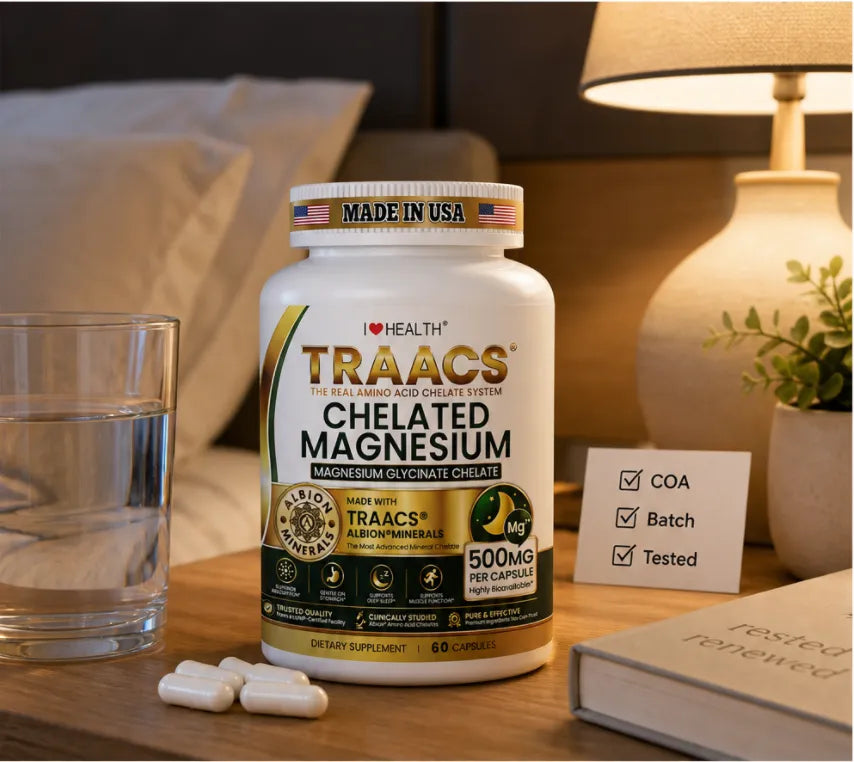
If measuring and taste point you toward capsules, our current selection includes a 240-capsule magnesium glycinate range with several strength and package choices. Our Albion TRAACS glycinate capsules are available in 60, 120, and 240-capsule counts. You can view these alongside our other current formats in the magnesium and sleep collection.
Format is only the first filter. Our magnesium quality checklist covers testing, origin wording, disclosure, and cost comparison without repeating those subjects here. A capsule format, branded ingredient, or larger bottle is not proof of better sleep, so judge the label, evidence, tolerance, and routine together.

Keep the Same Safety Limits
Powder and capsules follow the same elemental magnesium safety rules. The adult upper limit is 350 mg per day from supplements and magnesium-containing medications unless a healthcare professional recommends otherwise. Magnesium from food does not count toward this supplemental limit.
High supplemental intake can cause diarrhea, nausea, and abdominal cramping. The risk of toxicity increases with impaired kidney function. Magnesium can also interfere with certain antibiotics and oral bisphosphonates, so timing may need to follow professional guidance.
Persistent insomnia, loud snoring, breathing pauses, or unsafe daytime sleepiness needs clinical attention. The NHLBI insomnia overview distinguishes short-term sleep trouble from symptoms that warrant evaluation.
Choose Format, Then Judge the Formula
Capsules are the most convenient default, while powder is useful for flexible mixing and easier swallowing. Neither delivery format is proven better for sleep. Compare elemental magnesium, magnesium sources, serving accuracy, other ingredients, and the routine you can follow before deciding.
Frequently Asked Questions
Q1. Can You Open a Magnesium Glycinate Capsule?
It depends on the product. A standard powder-filled capsule may sometimes be opened, but modified-release or specially coated products should not be altered. Follow the label and ask a pharmacist when the dosage form is unclear. Opening a capsule does not create a proven sleep advantage.
Q2. How Much Water Should You Use With Powder?
Use the amount stated on the product label. More water may change taste and drinking convenience, but it does not change the elemental magnesium in a measured serving. Mix thoroughly and avoid estimating the powder by eye when the label provides a specific scoop or weight.
Q3. Are Flavored Powders Better for a Bedtime Routine?
Not automatically. Flavor can make a powder easier to take, but sweeteners, acids, or added active ingredients may not suit every person. Review the complete ingredient list and avoid assuming that a bedtime flavor or drink ritual proves a stronger sleep effect.
Q4. Are Capsules Easier to Travel With?
Usually, yes. Capsules avoid carrying a scoop and mixing container, and they provide fixed units away from home. Keep them in labeled packaging and follow travel rules for supplements. Powder can still work when it is securely packed and the serving tool remains available.
Q5. Can Scoop Size Change the Dose?
Yes. A level, packed, or heaped scoop can hold different amounts, and scoops from different products are not interchangeable. Follow the product's measuring directions. If precision is important and the label provides a gram weight, use an appropriate scale or ask the manufacturer for guidance.
Disclaimer
This content is for general educational purposes and is not medical advice. Dietary supplements are not intended to diagnose, treat, cure, or prevent disease. Ask a qualified healthcare professional before use when health conditions, pregnancy, medication, or dose concerns apply.