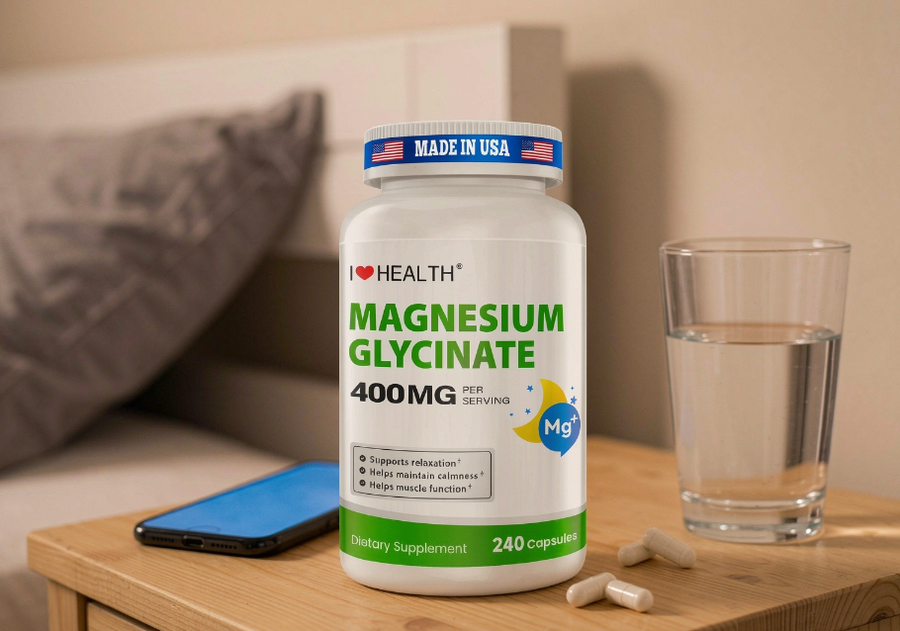

A high quality magnesium glycinate supplement clearly identifies its magnesium form, elemental dose, other ingredients, testing, manufacturing controls, and origin claims. The best choice is not automatically the highest dose or most expensive bottle. It is the product whose label and supporting documents let you verify what you will take and what each serving costs.
What Makes Magnesium Glycinate High Quality?
High quality means the product is accurately identified, appropriately formulated, transparently labeled, and supported by reliable quality controls. No single badge, dose, or marketing phrase proves all four.
Use five questions to judge the whole product:
- Does the label distinguish magnesium glycinate from other magnesium forms?
- Does the Supplement Facts panel state elemental magnesium per serving?
- Do the other ingredients suit your dietary and allergy needs?
- Can you verify testing, manufacturing standards, and relevant origin claims?
- Is the cost reasonable for the number of servings and the elemental amount provided?
Quality also has to fit your needs. A simple glycinate product may suit someone who wants one magnesium form, while a multi-form formula may suit a shopper who intentionally wants a blend. Our magnesium support collection shows these formats side by side, but the label still determines what each product contains.

Is It Fully Chelated, Buffered, or Blended?
These terms describe different formulations, and none should be treated as a universal quality grade. The right choice begins with knowing which one you are buying.
| Formulation | What It Usually Means | What to Check |
|---|---|---|
| Fully chelated glycinate | Magnesium is bound to glycine, without another magnesium salt added to raise the elemental amount. | Look for a clear glycinate or bisglycinate source and no second magnesium form. |
| Buffered glycinate | The chelated ingredient is combined with another magnesium source, often magnesium oxide. | Check whether the second form appears in Supplement Facts or the ingredient list. |
| Magnesium blend | Two or more named magnesium forms are included by design. | Confirm each form, the total elemental magnesium, and whether individual amounts are disclosed. |
Buffered does not automatically mean defective, and blended does not automatically mean better. The problem is unclear labeling. A shopper who expects a single fully chelated form should not have to infer that another magnesium source is present.
Our buffered magnesium glycinate guide explains how chelated, buffered, and non-buffered formulas differ. Our guide to glycinate and bisglycinate naming also clarifies why those two names usually refer to the same chelated compound. If the label remains vague, ask for the raw-material specification rather than assuming the formula is fully chelated.

How Much Elemental Magnesium Does It Provide?
The elemental magnesium number is the amount that matters for intake. The weight of magnesium glycinate is larger because it includes magnesium plus the glycine attached to it.
The Supplement Facts panel should state magnesium per serving and identify its source, such as magnesium glycinate. The NIH magnesium fact sheet confirms that this panel reports elemental magnesium, not the weight of the full magnesium compound. The FDA nutrition labeling guide provides the federal framework for declaring dietary ingredients and amounts.
Read three numbers together: elemental magnesium per serving, capsules or scoops per serving, and servings per container. A large front-label number may describe compound weight, a full daily serving, or several capsules. It should never replace the Supplement Facts panel.
Our TRAACS magnesium glycinate formula separates the glycinate amount from the elemental magnesium amount so shoppers can compare the label on the same basis.
More is not always better. The National Institutes of Health sets an adult upper limit of 350 mg per day for magnesium from supplements and medications, unless a healthcare professional recommends otherwise. Magnesium can interact with certain medicines, and impaired kidney function increases toxicity risk. Review the label and seek professional guidance when medications, pregnancy, kidney disease, or dose concerns apply.

Are There Unnecessary Fillers, Allergens, or Sweeteners?
Other ingredients should have a clear purpose and fit your needs. A capsule material, flow agent, flavor, or sweetener is not automatically a quality defect, but it should be disclosed and justified by the dosage form.
Read the ingredient statement for:
- Capsule or tablet materials that affect dietary preferences.
- Sweeteners, flavors, and colors that are unnecessary for your intended format.
- Added magnesium forms that change whether the product is fully chelated.
- Ingredients you personally avoid because of allergy, sensitivity, or preference.
The FDA ingredient labeling guide distinguishes dietary ingredients from excipients and fillers. U.S. law recognizes nine major food allergens, and their food sources must be declared when applicable. The FDA allergen labeling information provides the current list and labeling context.
Treat broad words such as clean or natural as marketing unless the label defines them. A short ingredient list can be useful, but accurate disclosure and suitability matter more than ingredient count alone.
Does the Brand Show Testing, cGMP, and Origin?
A transparent seller should separate finished-product testing, manufacturing controls, and origin information. Each answers a different quality question.
Testing
Testing should identify the product or material, lot, methods, specifications, and actual results. A certificate of analysis (COA) is more useful when its lot number matches your bottle. The FDA's dietary supplement cGMP guide describes identity testing, supplier qualification, specifications, and COA requirements.
An independent laboratory adds separation from the seller, but the lab's scope still matters. ISO/IEC 17025 addresses laboratory competence, impartiality, and consistent operation. The official laboratory competence standard helps you understand what accreditation covers.
Manufacturing Controls
Current good manufacturing practice applies to production systems, records, sanitation, specifications, and quality control. It does not mean the FDA approved the supplement or facility. Independent product certification can add label review, testing, audits, and ongoing surveillance. The NSF certification process shows how broader certification differs from a single test report.
Origin
Origin statements should specify whether they apply to the ingredient, final manufacturing, packaging, or shipping. An unqualified Made in USA claim has a higher standard than a statement about one U.S. process. The FTC origin claim guidance requires truthful substantiation and explains qualified claims.
We provide access to COAs, specifications, and supplier documentation through our Transparency Program. A transparency portal does not replace your review, but it lets you connect the bottle, lot, and available evidence.
How Should You Compare Price per Serving?
Compare the cost of the serving you would actually take, not the bottle price alone. A larger bottle can still cost more per usable serving if the serving requires several capsules.
Use this sequence:
- Divide the current bottle price by servings per container.
- Record the elemental magnesium in one serving.
- Compare products at similar elemental amounts and similar formulations.
- Include the capsules or scoops required for that serving.
- Check whether subscription pricing, shipping, or bundle discounts change the ongoing cost.
If elemental amounts differ, calculate cost per 100 mg of elemental magnesium: price per serving divided by elemental milligrams, then multiplied by 100. Use that number only after confirming that the forms, testing, and ingredient standards meet your needs. Our magnesium glycinate capsule options let you compare serving structure across available strengths.
Which Red Flags Suggest Mostly Marketing?
The strongest red flags are claims that cannot be checked against the label, a document, or an authoritative standard. Treat the following as reasons to pause:
- The front label shows a large milligram number but the elemental amount is unclear.
- The product says glycinate while another magnesium form is hidden or hard to identify.
- The seller says third-party tested but provides no lab, lot, scope, certification, or results.
- A certification logo cannot be verified in the issuing organization's directory.
- The product claims an FDA-approved supplement or facility. The FDA states that it does not approve facilities in its product approval facts.
- Words such as pharmaceutical grade, premium, maximum absorption, or clean appear without a defined standard or evidence.
- The origin statement blurs ingredient sourcing, manufacturing, packaging, and shipping.
- The price comparison ignores serving size or elemental magnesium.
A trustworthy product makes verification easier than persuasion. Clear Supplement Facts, a complete ingredient list, accessible lot documentation, precise manufacturing language, and a comparable serving cost are stronger buying signals than oversized numbers or vague superlatives.
The Bottom Line
Choose a high quality magnesium glycinate supplement by verifying the form first, then elemental magnesium, other ingredients, testing, manufacturing controls, origin wording, and cost per serving. No single claim replaces that sequence. The strongest product is the one that gives you enough accurate information to compare it fairly and use it appropriately.
Disclaimer
This content is for general educational purposes and is not medical advice. Dietary supplements are not intended to diagnose, treat, cure, or prevent disease. Ask a qualified healthcare professional before use when health conditions, pregnancy, medication, or dose concerns apply.