
Liposomal magnesium glycinate has a sound delivery concept, but current human evidence does not prove that it absorbs better than standard magnesium glycinate.
The clearest direct trial found no significant absorption advantage for magnesium. For most adults, elemental dose, tolerance, testing, and price are more useful buying criteria than the word liposomal.
What Is Liposomal Magnesium Glycinate?
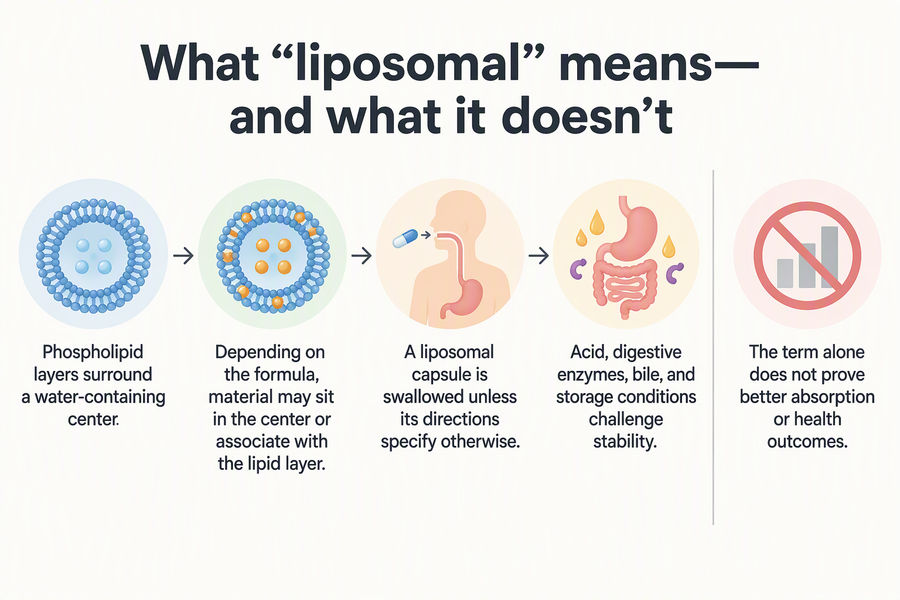
Liposomal magnesium glycinate combines two formulation ideas. Magnesium glycinate is magnesium bound to glycine through chelation. A liposomal product places the ingredient in, or associates it with, tiny spheres made from phospholipids. These fats can form a double layer around a water filled center.
Chelation changes the chemical form of magnesium. Liposomal delivery changes how that form is packaged. One does not replace the other, and neither term alone reveals how much usable magnesium a serving provides.
Liposomes can protect some compounds during digestion. However, oral liposomes also face stomach acid, digestive enzymes, and bile salts. Stability depends on lipid composition, particle size, manufacturing, and storage. A review of oral liposome delivery identifies instability in the gastrointestinal tract as a central challenge. Lecithin or phospholipids on a label do not prove effectiveness.
Our guide to what liposomal delivery actually means covers why this technology can help some ingredients. Here the question is whether it adds a measurable benefit to magnesium glycinate.

Does Liposomal Delivery Improve Magnesium Absorption?
Not conclusively. The best direct human evidence did not find a significant improvement.
In a randomized crossover trial, 25 healthy adults took either a liposomal multivitamin and mineral formula or a closely matched standard formula. The products supplied 22.0 mg and 23.3 mg of elemental magnesium, roughly 5 percent of the Daily Value. Researchers measured blood magnesium over six hours.
They found no significant difference in magnesium exposure, peak concentration, or time to peak between the formulas. The liposomal product improved iron absorption, but not magnesium absorption (Tinsley et al., 2022).
The randomized absorption trial is informative but not final. The dose was about 5 percent of the Daily Value, the study lasted six hours, and magnesium was part of a multinutrient product. It did not test a full dose, single ingredient liposomal magnesium glycinate supplement over time.
A later analysis found a more sustained rise in serum magnesium at six hours, yet no significant overall treatment effect. That is a reason for more research, not proof of superior absorption.
Liposomal delivery may help a specific formulation, but each product needs its own evidence. Benefits found for liposomal iron, vitamin C, or medication cannot be transferred to magnesium glycinate.

How Are Chelated and Liposomal Magnesium Different?
Chelated and liposomal refer to different parts of the delivery process.
Magnesium glycinate is a chelate because glycine is bound to magnesium. This can support solubility and digestive tolerance.
A liposome is a phospholipid carrier around or alongside the magnesium compound. Performance depends on stable vesicles, the amount encapsulated, and digestive survival.
A product can contain quality magnesium glycinate but weak liposomal evidence. It can also have a characterized phospholipid system but little elemental magnesium. Evaluate the two technologies separately.
The NIH magnesium fact sheet emphasizes that absorption varies by form and that more soluble forms tend to absorb better than poorly soluble forms. It does not identify liposomal magnesium glycinate as a proven superior category.
What Evidence Is Strong and What Is Mostly Marketing?
Strong evidence requires a direct human comparison using similar elemental doses, appropriate blood or urine markers, disclosed formulations, and adequate follow up. Independent replication adds confidence.
For liposomal magnesium glycinate, evidence is early. One small human crossover trial found no significant advantage. Another analysis suggested a different time pattern but no significant overall effect.
Independent trials have not shown that this form corrects low magnesium faster, works at a smaller dose, improves symptoms more, or causes fewer digestive effects.
The following claims need more support before they should influence a purchase.
- A precise absorption percentage without a linked human study on the finished product.
- Claims such as maximum bioavailability or cellular delivery without a named comparison and measured result.
- Benefits borrowed from research on a different liposomal nutrient.
- Images of round particles without particle size data, an encapsulation test, or independent verification.
- A premium price justified only by phospholipids in the ingredient list.
Claims should match evidence. The FDA rules on structure and function claims separate them from authorized health claims. Supplements are not approved for safety and effectiveness before sale, so promotional language is not proof.
How Can You Evaluate a Liposomal Magnesium Label?
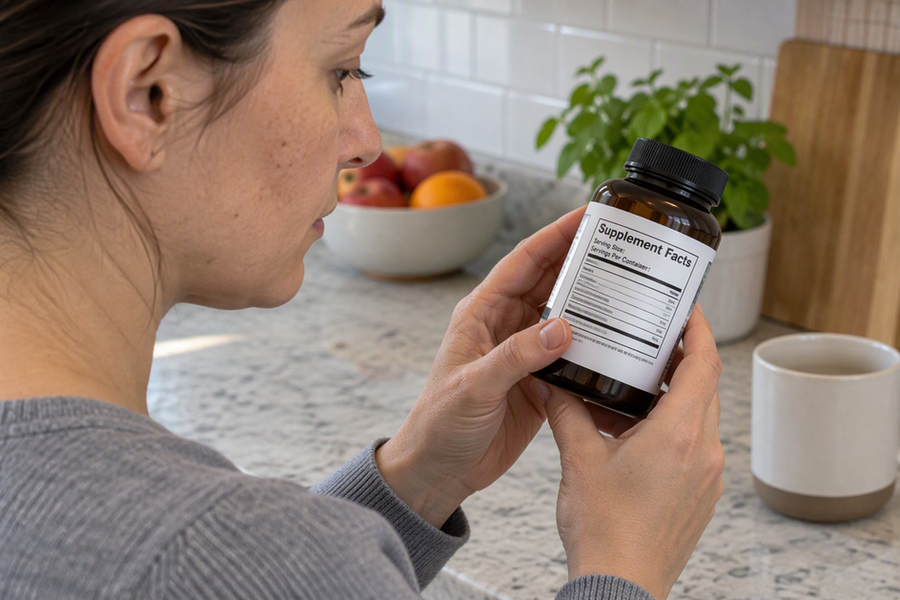
Start with elemental magnesium, not compound weight. The Supplement Facts panel should state magnesium per serving and its percent Daily Value. The Daily Value is 420 mg, while individual needs vary.
Then apply six checks.
- Confirm the magnesium source. Look for magnesium glycinate or magnesium bisglycinate. Check whether magnesium oxide or another buffering form is also present.
- Check the serving size. A label may require several capsules to deliver the stated amount.
- Identify the lipid source. Sunflower or soy lecithin is common. People with allergies or dietary preferences need this information.
- Look for finished product data. Useful details include particle size, encapsulation efficiency, stability through expiration, and a direct human absorption study. A supplier paper on a raw ingredient is weaker than evidence on the product you will take.
- Verify quality testing. A current certificate of analysis should match the lot and confirm potency and contaminants; I Love Health publishes lot documents through its Transparency Program. Programs such as NSF supplement certification independently review label claims and contaminants. Facility certification alone does not prove that a finished product is liposomal or better absorbed.
- Compare cost per elemental dose. Divide the price by total servings, then compare equal amounts of elemental magnesium. Paying more can make sense for proven convenience or tolerance, but not for an unsupported absorption promise.

Who May Do Fine With Standard Magnesium Glycinate?
Most adults who tolerate a standard chelated magnesium capsule may not need a liposomal version.
Our Albion TRAACS magnesium glycinate clearly separates 500 mg of magnesium glycinate from the 90 mg elemental magnesium per capsule.
A standard capsule is especially reasonable when it has a transparent elemental dose, verified quality, manageable capsule count, good personal tolerance, and a lower cost. A broader comparison of our available formulas is in the magnesium and sleep support collection.
People with kidney disease should consult a clinician before using any magnesium supplement because reduced kidney function can allow magnesium to build up. Magnesium can also reduce absorption of some antibiotics and oral bisphosphonates.
Diuretics and long term proton pump inhibitor use can change magnesium status. A pharmacist can provide the correct timing for a specific medication.
Adults should generally not exceed 350 mg per day of supplemental magnesium from supplements and medications unless a health professional recommends it. This upper limit does not include magnesium naturally found in food. Diarrhea, nausea, and abdominal cramping can signal excessive supplemental intake.
Judge Liposomal Magnesium on Evidence, Not the Label
Liposomal magnesium glycinate is promising formulation science, but better absorption remains unproven for current consumer products. One direct human trial found no significant magnesium advantage, and later findings remain inconclusive.
Choose based on elemental magnesium, clear formulation details, finished product testing, tolerance, and cost. Standard magnesium glycinate remains a practical choice for most people who tolerate it.
Liposomal Magnesium Glycinate FAQs
Does Liposomal Magnesium Glycinate Need Refrigeration?
Follow the product label. Many sealed products are stable at room temperature, but liquid liposomes can be sensitive to heat, light, oxygen, and repeated opening. Refrigeration may be required after opening. Do not freeze a liquid unless the manufacturer permits it.
Can Liposomal Magnesium Glycinate Contain Soy?
Yes. Phospholipids can come from soy or sunflower lecithin. People with a soy allergy should verify the source and allergen statement rather than assuming every liposomal product uses sunflower lecithin.
Are Liquid Liposomal Products Better Than Capsules?
Not automatically. Liquids can be convenient for people who dislike pills, while capsules may improve portability and dose consistency. Absorption depends on the actual formulation and stability, not simply whether the product is liquid.
Can You Mix Liquid Liposomal Magnesium With a Drink?
Usually, if the label allows it. Mix it into a small amount of cool liquid and consume it promptly. Hot drinks, long storage after mixing, or acidic beverages may affect some formulations. Follow product specific directions.
Why Does a Liposomal Magnesium Product Taste Bitter?
Magnesium salts and phospholipids can create bitter, mineral, or earthy flavors. Taste does not prove potency, spoilage, or successful encapsulation. Discard the product if odor, color, or texture changes beyond the manufacturer's stated range.
Disclaimer
This content is for general educational purposes and is not medical advice. Dietary supplements do not diagnose, treat, cure, or prevent disease. Consult a qualified health professional before using magnesium if you have kidney disease, take medication, are pregnant or nursing, or have persistent symptoms.